
In legal disputes, criminal matters, fraud cases, civil litigation, and corporate misconduct investigations, evidence is often the single factor that determines the outcome of a case. Allegations, suspicions, and assumptions are rarely enough. Courts require factual, legally obtained, and properly preserved evidence that can withstand scrutiny from attorneys, insurers, disciplinary panels, and judicial officers.
This is where professional private investigators play a critical role.
A skilled private investigator does far more than simply “follow people around.” Modern investigations involve surveillance, digital forensics, background investigations, asset tracing, cybercrime analysis, witness interviews, evidence preservation, and comprehensive reporting — all conducted within the boundaries of South African law.
Chain of evidence is one of the most critical aspects of any investigation. You may obtain highly damaging or compelling evidence, but if that evidence was obtained unlawfully, or if the chain of custody is incomplete or compromised, its use in a court of law may be challenged or deemed inadmissible. Furthermore, using an unregistered private investigator can expose you to significant legal and evidentiary risks, potentially undermining the entire case.
At Royal Investigations, investigations are approached with one primary objective: obtaining credible, court-ready evidence that can support legal proceedings, internal disciplinary action, insurance disputes, or criminal complaints.
Whether the matter involves fraud, infidelity, cybercrime, employee misconduct, extortion, theft, insurance claims, or financial irregularities, evidence must be gathered correctly from the beginning.
This is typically the point where victims ask themselves: “When should I employ a private investigator?” The answer, in many cases, is simple — immediately. The earlier a private investigator becomes involved, the greater the opportunity to preserve evidence, trace digital and financial footprints, identify suspects, and prevent critical information from being lost, altered, or destroyed.
This article explores how professional private investigators help build court-ready evidence in South Africa, why legally compliant evidence gathering matters, and how experienced investigators can strengthen a client’s position before litigation even begins.
Why Evidence Matters in South African Courts
South African courts rely heavily on documentary, digital, photographic, testimonial, and forensic evidence. However, not all evidence carries the same weight.
Evidence must generally be:
- Relevant to the matter
- Legally obtained
- Authentic and verifiable
- Properly preserved
- Presented with supporting documentation
- Collected without violating constitutional rights
Unfortunately, South Africa is not known for maintaining consistently updated or comprehensive crime statistics relating specifically to evidentiary failures. However, publicly available SAPS figures indicated that during the 2018/2019 reporting period, more than 5.4 million criminal cases were closed or not proceeded with due to insufficient evidence.
While these figures are concerning, they also highlight the immense pressure placed on law enforcement agencies, often compounded by limited resources, case overloads, and shortages of specialised investigative expertise. As a result, many victims, businesses, attorneys, and insurers increasingly turn to alternative investigative professionals such as forensic investigators, digital forensic specialists, and private investigators to assist in gathering legally obtained, properly preserved, and court-ready evidence.
Royal Investigations offers professional private investigation services in Johannesburg, Pretoria, Cape Town, and throughout South Africa, with a strong focus on legally compliant evidence gathering, forensic investigations, and litigation support.

What Makes Evidence “Court-Ready”?
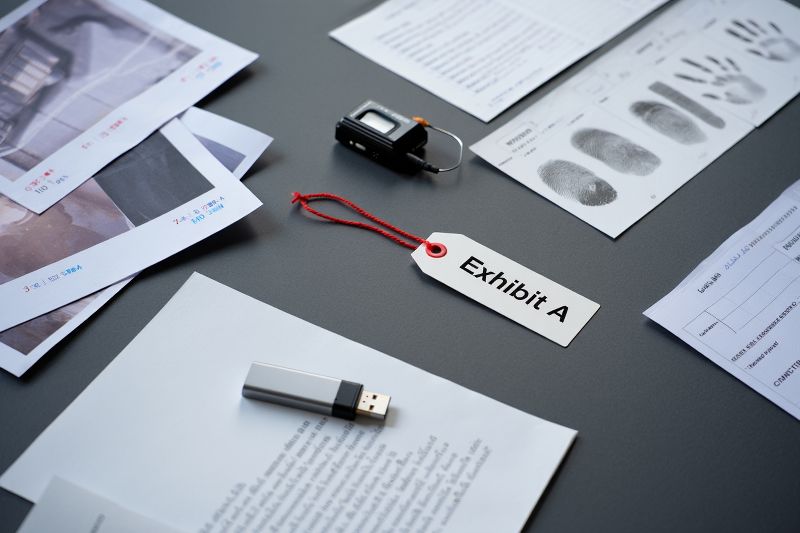
Court-ready evidence refers to information and material that has been collected, preserved, documented, and presented in a manner that supports legal admissibility and credibility.
This may include:
- Surveillance footage
- Photographic evidence
- Video recordings
- Witness statements
- Digital forensic reports
- Cellphone analysis
- Asset tracing reports
- Financial records
- Email headers and metadata
- GPS tracking data (where legally permitted)
- Time-stamped observations
- Social media intelligence
- Corporate records
- Chain-of-custody documentation
A professional investigator understands that evidence is not simply about “finding information.” It is about proving authenticity, reliability, and lawful acquisition. Evidence alone is often not enough. In many matters, there must also be a qualified and credible expert capable of defending the investigation, methodology, findings, and chain of evidence under cross-examination in a court of law.
Not every private investigator will automatically be recognised as an expert witness. True expertise is developed through years of practical investigative experience, specialised training, legal understanding, courtroom exposure, and a proven track record of conducting lawful and professional investigations. In this industry, credibility is earned — you must earn your stripes through experience, integrity, and the ability to withstand scrutiny when it matters most.
The Importance of Legally Obtained Evidence
One of the biggest mistakes individuals make is attempting to conduct investigations themselves.
This often leads to:
- Illegal recordings
- Privacy violations
- Tampering with digital evidence
- Unlawful interception of communications
- Destruction of metadata
- Harassment allegations
- Defamation exposure
South Africa’s legal framework places significant emphasis on privacy rights and lawful evidence collection. Irrespective of what you may be able to prove, the manner in which the evidence was obtained is often even more important. We cannot disregard a person’s right to privacy simply because they are suspected of being a criminal. Every individual, regardless of the allegations against them, is entitled to the same constitutional rights and legal protections under South African law.
Investigators must operate within legislation such as:
- POPIA (Protection of Personal Information Act)
- RICA (Regulation of Interception of Communications Act)
- Cybercrimes Act
- South African law of evidence
- Labour legislation and disciplinary frameworks
For example, many people incorrectly believe a private investigator can “hack” WhatsApp accounts, retrieve private messages illegally, or access phone records without consent. In reality, professional and lawful investigators do not engage in unlawful interception activities.
Instead, investigators focus on legally defensible investigative methodologies that protect both the client and the integrity of the case.

How Private Investigators Gather Court-Ready Evidence
1. Surveillance Investigations
Surveillance remains one of the most effective evidence-gathering techniques in South Africa.
Professional surveillance involves:
- Time-stamped observations
- Photographic evidence
- Video documentation
- Movement tracking
- Behavioural analysis
- Verification of statements
- Corroboration of claims
Surveillance is commonly used in:
- Infidelity investigations
- Insurance fraud
- Employee misconduct
- Theft investigations
- Custody disputes
- Corporate investigations
- Asset misuse matters
An experienced investigator understands how to conduct surveillance discreetly while ensuring the evidence remains credible and professionally documented.
2. Digital Forensic Investigations
Modern investigations increasingly involve digital evidence.
Digital forensic investigations may include:
- Email analysis
- Metadata preservation
- IP tracing
- Login analysis
- Device examinations
- Fraud pattern analysis
- Business email compromise investigations
- Social media intelligence gathering
According to Interpol, cybercrime has become one of the fastest-growing criminal threats globally, with phishing, ransomware, impersonation fraud, and online extortion increasing dramatically.
In South Africa, cyber-enabled fraud has escalated significantly, particularly in corporate environments.
Digital evidence must be handled carefully because improperly accessed devices or deleted logs can compromise a case.
Professional investigators preserve digital evidence in a forensic manner to maintain evidential integrity.
3. Background Investigations
Background investigations are essential in both civil and corporate matters.
These investigations may uncover:
- Criminal histories
- Undisclosed business interests
- Financial distress
- Fraud indicators
- Identity inconsistencies
- Litigation history
- Employment discrepancies
The Association of Certified Fraud Examiners (ACFE) estimates that organisations lose approximately 5% of annual revenue to occupational fraud globally.
Many fraud-related cases could have been mitigated through proper vetting and due diligence.
Professional investigators compile structured reports that can support legal action, disciplinary proceedings, or risk mitigation decisions.
4. Witness Interviews and Statement Verification
Witness testimony can significantly influence a case — but witness credibility matters.
Professional investigators know how to:
- Conduct structured interviews
- Verify inconsistencies
- Corroborate timelines
- Identify contradictions
- Preserve signed statements
- Assess credibility indicators
Improperly conducted witness engagement can contaminate testimony or create evidential weaknesses.
Experienced investigators understand the importance of neutrality, documentation, and procedural fairness.
5. Chain of Custody Management
One of the most overlooked aspects of investigations is chain of custody.
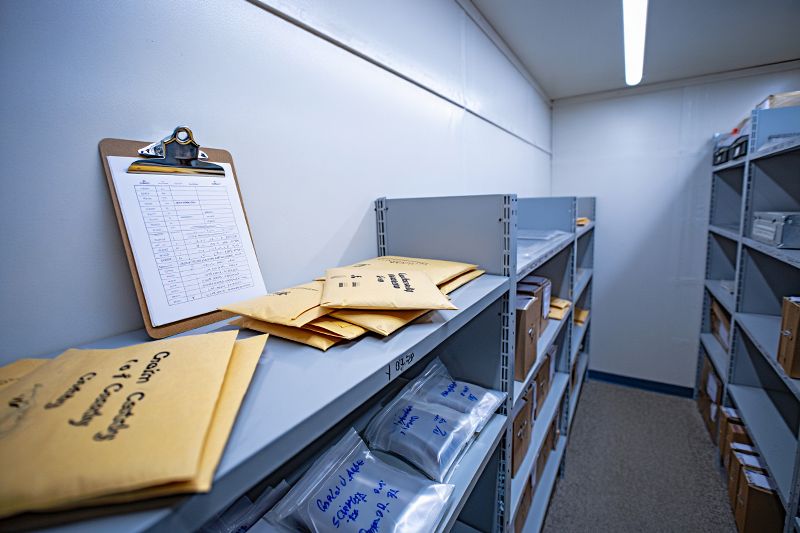
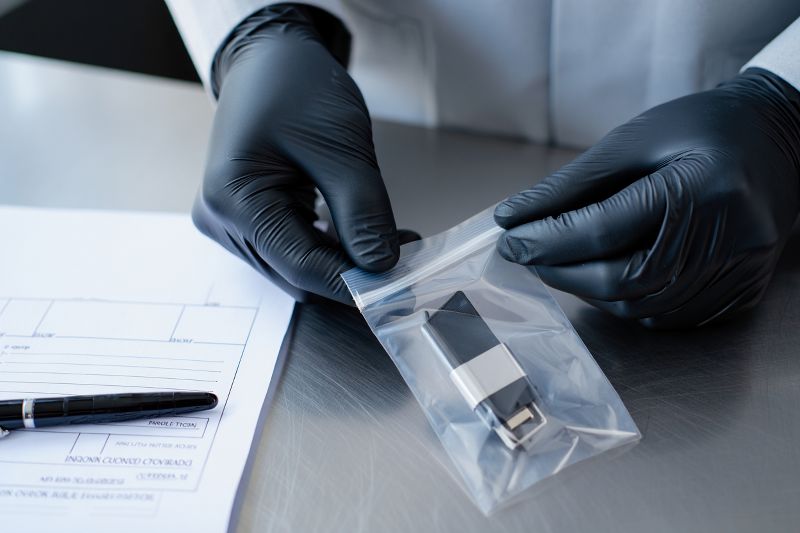
Chain of custody refers to the documented handling of evidence from collection through to presentation.
This process helps prove that evidence:
- Was not tampered with
- Was properly secured
- Remained authentic
- Maintained evidential integrity
This becomes especially important in:
- Digital forensic investigations
- Fraud matters
- Criminal investigations
- Corporate disciplinary hearings
A broken chain of custody can weaken or invalidate evidence entirely.

Why Timing Matters in Investigations
One of the biggest mistakes complainants make is waiting too long before consulting investigators.
Delays often result in:
- Deleted digital evidence
- Lost CCTV footage
- Witnesses becoming unavailable
- Altered financial records
- Destroyed communication logs
- Fading witness recollection
For example, many CCTV systems overwrite footage within days or weeks.
Similarly, digital logs may be automatically purged depending on system configurations.
The earlier investigators become involved, the better the chances of preserving critical evidence.
How Royal Investigations Builds Stronger Cases
At Royal Investigations, investigations are approached strategically from the outset.
The agency focuses on:
- Legally compliant evidence gathering
- Detailed investigative reporting
- Digital forensic preservation
- Surveillance operations
- Corporate investigations
- Fraud investigations
- Asset tracing
- Court-support documentation
Royal Investigations has earned recognition through media exposure on:
- Carte Blanche
- eNCA
- Checkpoint
- Wie’s Nuus
The company’s investigative teams include experienced private investigators, criminologists, and specialists with extensive field experience.
This multidisciplinary approach strengthens the quality and credibility of investigations.
Corporate Investigations and Litigation Support

Common matters include:
- Internal theft
- Procurement fraud
- Intellectual property theft
- Employee misconduct
- Shareholder disputes
- Insurance fraud
- Vendor due diligence
- Corruption investigations
Professional investigators assist attorneys and businesses by gathering objective evidence that can support:
- Civil litigation
- Criminal complaints
- Labour disputes
- Internal disciplinary hearings
- Insurance disputes
The Role of Investigators in Fraud Cases
Fraud investigations often require combining multiple investigative disciplines.
This may include:
- Financial tracing
- Digital analysis
- Identity verification
- Surveillance
- Company record analysis
- Open-source intelligence
- Asset tracing
According to Statistics South Africa and reports from commercial crime units, fraud-related offences remain a major concern for businesses and consumers nationwide.
Professional investigators help identify:
- How the fraud occurred
- Who benefited
- Associated entities
- Financial movement patterns
- Potential recovery avenues
Private Investigators and Admissible Digital Evidence
Digital evidence has become central in modern litigation.
However, screenshots alone are often insufficient.
Investigators help preserve:
- Metadata
- Access logs
- Email headers
- Device timelines
- IP records
- Authentication records
Improperly handled digital evidence can be challenged in court.
Professional digital evidence handling increases credibility and reduces evidential vulnerabilities.
Why Experience Matters in Investigations
There is a significant difference between collecting information and building a legally defensible case.
Experienced investigators understand:
- Legal limitations
- Evidentiary standards
- Risk exposure
- Documentation protocols
- Court expectations
- Digital forensic preservation
- Surveillance methodologies
An inexperienced investigator may unintentionally compromise evidence, expose the client to liability, or weaken a future case.
Royal Investigations prioritises professionalism, legality, discretion, and evidential integrity throughout every investigation.
Frequently Asked Questions
Can a private investigator gather evidence for court in South Africa?
Yes. A professional private investigator can legally gather evidence for civil, criminal, corporate, and disciplinary matters provided the investigation complies with South African law.
Is evidence gathered by a private investigator admissible in court?
Evidence may be admissible if it was lawfully obtained, properly documented, relevant to the matter, and preserved correctly.
What is chain of custody in an investigation?
Chain of custody refers to the documented handling and preservation of evidence to ensure authenticity and integrity from collection through to court presentation.
Can a private investigator access WhatsApp messages?
Professional investigators cannot unlawfully intercept private communications. Investigations must comply with RICA and other South African legislation.
How do private investigators preserve digital evidence?
Investigators preserve logs, metadata, email headers, timestamps, and digital records using forensic methodologies designed to maintain evidential integrity.
Can a private investigator help with fraud investigations?
Yes. Fraud investigations often involve surveillance, financial tracing, digital forensics, background checks, and evidence preservation.
How quickly should I contact a private investigator after fraud or misconduct?
Immediately. Delays can result in lost CCTV footage, deleted logs, missing witnesses, and compromised evidence.
How quickly should I contact a private investigator after fraud or misconduct?
Immediately. Delays can result in lost CCTV footage, deleted logs, missing witnesses, and compromised evidence.
Can Royal Investigations assist nationwide?
Yes. Royal Investigations conducts investigations throughout Johannesburg, Pretoria, Cape Town, and across South Africa.
What types of cases require court-ready evidence?
Common matters include:
- Fraud investigations
- Infidelity cases
- Insurance claims
- Cybercrime
- Employee misconduct
- Asset tracing
- Theft investigations
- Civil litigation
- Corporate disputes
Why should I hire a professional private investigator instead of investigating myself?
Self-investigation can expose individuals to legal risks, privacy violations, evidence contamination, and procedural mistakes. Professional investigators understand lawful evidence gathering and evidential standards.
Conclusion
Building a strong legal case starts long before court proceedings begin. Evidence must be carefully gathered, preserved, analysed, and documented in a legally compliant manner.
Professional private investigators play a vital role in helping individuals, businesses, attorneys, and insurers obtain credible, court-ready evidence capable of supporting litigation, disciplinary proceedings, fraud investigations, and criminal complaints.
At Royal Investigations, investigations are conducted with professionalism, discretion, and evidential integrity at the forefront. From surveillance and fraud investigations to digital forensics and litigation support, the agency provides strategic investigative solutions throughout South Africa.
When the truth matters — evidence matters even more.