
Private investigators today have access to more information than at any other point in history, and much of that information comes directly from social media. Every photograph uploaded, every restaurant check-in, every comment, every friend connection, and every location tag creates a digital footprint that can assist modern investigations.
For experienced private investigators, social media is no longer simply a platform where people share their lives. It has become a powerful source of intelligence that can help verify alibis, locate suspects, identify associates, uncover fraud, expose deception, trace missing persons, and support litigation.
At Royal Investigations, we regularly incorporate Open-Source Intelligence (OSINT) techniques into our investigations. While social media rarely tells the complete story, it often provides valuable clues that help investigators connect the dots and uncover evidence that might otherwise remain hidden.
Whether we are conducting a cheating spouse investigation, fraud investigation, child custody matter, missing person investigation, asset trace, or surveillance, social media has become one of the most important tools available to the modern private investigator.
Professional surveillance is a structured, lawful, and highly disciplined investigative process aimed at gathering factual information and admissible evidence without violating the law. When conducted correctly, surveillance can uncover fraud, confirm restraint of trade violations, expose infidelity, identify employee misconduct, trace criminal activity, and support civil or criminal litigation.
At Royal Investigations, surveillance operations are conducted by experienced investigators, including former law enforcement specialists, and surveillance professionals trained in covert observation, counter-surveillance awareness, and evidence preservation.
In South Africa, surveillance investigations have become increasingly important due to rising fraud, cybercrime, corruption, insurance scams, workplace misconduct, and domestic disputes.
Our agency provide private investigation services in Johannesburg, Cape Town, Pretoria and the whole of South Africa.
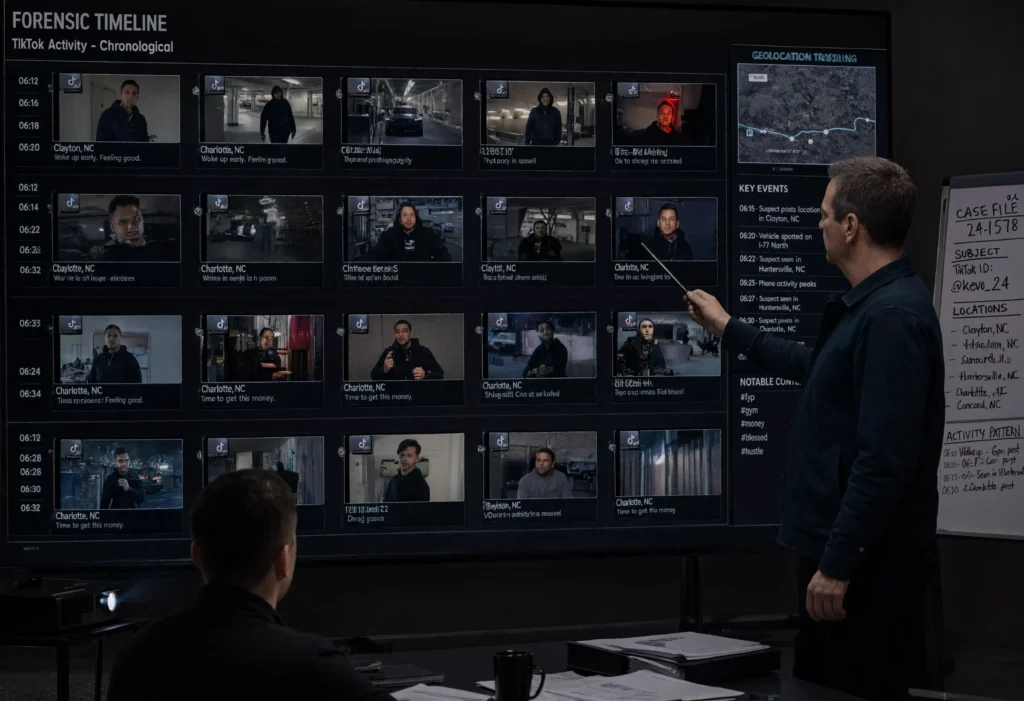
What Is Open-Source Intelligence (OSINT)?
Open-Source Intelligence, commonly known as OSINT, refers to the collection and analysis of information obtained from publicly available sources.
These sources include:
- Social media platforms
- Public records
- News articles
- Blogs
- Company websites
- Discussion forums
- Government databases
- Online directories
- Property records
- Court records
- Search engines
- Mapping services
OSINT does not involve hacking, unlawful interception, or accessing private accounts.
Instead, investigators collect and analyze information that individuals have already chosen to make public. Modern OSINT techniques allow investigators to combine multiple pieces of seemingly insignificant information into a meaningful intelligence picture.
To a non-professional, certain pieces of information may appear insignificant or completely irrelevant. To an experienced private investigator, however, that same information can be the key that unlocks an entire investigation. What may seem like a trivial detail to one person can often become critical evidence when viewed in the proper context.
This is precisely why specialists exist. No individual can be an expert in every field. As private investigators, we are trained to identify what information is relevant, what may become relevant later, and how seemingly unrelated facts can fit together to reveal the bigger picture. We know which details require immediate attention and which should be set aside for further analysis as an investigation progresses.
The Massive Scale of Social Media
The amount of information being generated online is staggering.
Billions of people use social media platforms every day, sharing photographs, videos, opinions, locations, and personal experiences.
Did You Know?
Every single day, people around the world share an estimated 5 billion photographs online.
Photos are no longer occasional keepsakes tucked away in albums. They have become one of the primary ways we communicate, document our lives, and tell our stories. Every image we post offers the world a glimpse into where we are, who we are with, what we own, and even our daily routines.
What many people don’t realise is that a single photograph can contain a wealth of intelligence. From location data and landmarks to vehicle registrations, personal possessions, and social connections, photos often reveal far more than intended.
Private investigators are not the only people using these data, unfortunately, the same information can also be exploited by scammers, stalkers, fraudsters, and other criminals.
The next time you take a photo and upload it to social media, remember: a photograph is not just a picture—it is data. Think carefully before sharing images online, because information released today could have consequences long into the future.
Research from the Reuters Institute continues to show growing dependence on social media and digital platforms as people increasingly engage online.
Every day, users create:
- Millions of photographs
- Millions of videos
- Location check-ins
- Comments
- Reviews
- Likes
- Shares
- Friend connections
- Business interactions
Many people underestimate how much information they reveal online.
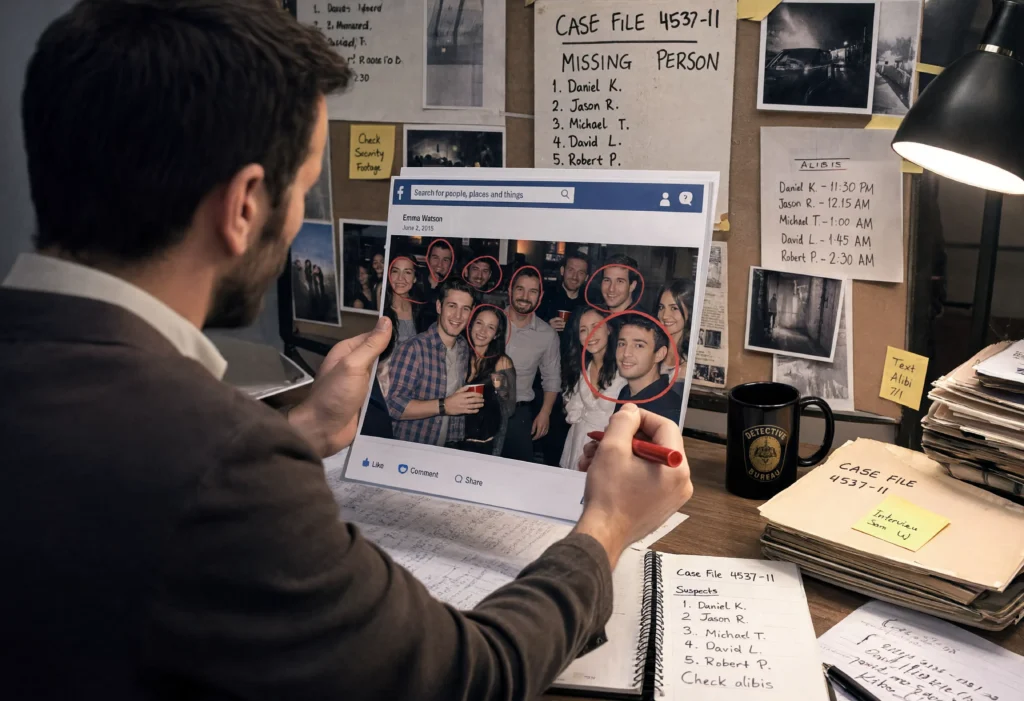
Every Social Media User Leaves a Digital Footprint
Most individuals believe they only share information when they intentionally post something.
The reality is very different.
A person’s digital footprint is often created through:
Location Check-Ins
Restaurant visits, hotel stays, airport check-ins, and event attendance can establish movement patterns and timelines.
Comments and Replies
People often reveal:
- Employment information
- Relationship status
- Business interests
- Personal disputes
- Travel plans
Friends and Followers
Social networks help investigators identify:
- Associates
- Family members
- Business partners
- Potential witnesses
- Known accomplices
Videos
Videos frequently reveal significantly more information than intended, including background conversations, addresses, landmarks, vehicle registrations, and other identifying details.
When viewed individually these pieces of information may appear insignificant.
When combined, they can create a remarkably detailed profile.
How Private Investigators Use Social Media Intelligence
A professional private investigator does not simply browse social media.
Investigators conduct structured intelligence gathering and analysis.
The goal is to identify patterns, verify information, and discover evidence that can support an investigation.
Building Subject Profiles
One of the first stages of many investigations involves building a comprehensive profile of the subject.
Social media may reveal:
- Full names
- Aliases
- Nicknames
- Employment history
- Educational history
- Family members
- Associates
- Locations frequented

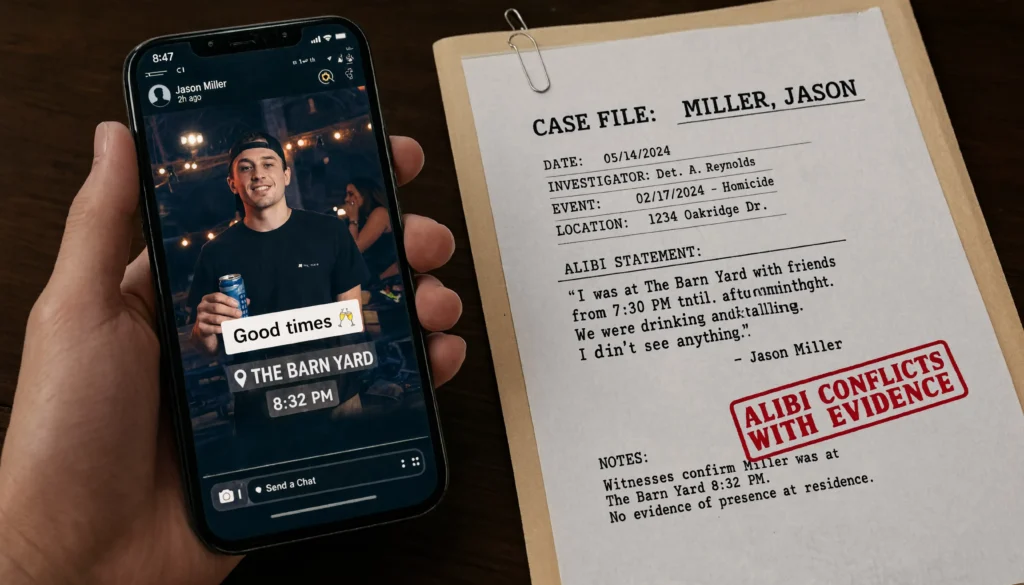
Verifying Alibis
One of the most common uses of social media intelligence is verifying alibis.
People frequently claim they were somewhere they were not.
Investigators compare:
- Social media posts
- Check-ins
- Tagged photographs
- Video uploads
- Witness statements
- Mobile timelines
A subject may claim to have been at work while simultaneously appearing in photographs at a sporting event.
Similarly, a suspect may claim to have remained at home while friends upload photographs showing them elsewhere.
Social media often provides crucial timeline evidence.
Assisting Surveillance Operations
Social media can dramatically improve surveillance efficiency.
Before commencing surveillance, investigators often review a subject’s online activity to identify:
- Daily routines
- Favourite restaurants
- Gym memberships
- Social circles
- Common travel routes
- Vehicles used
This intelligence assists surveillance planning and reduces investigative costs.
In many cases, social media helps investigators determine where and when surveillance resources should be deployed.
Tracing Missing Persons
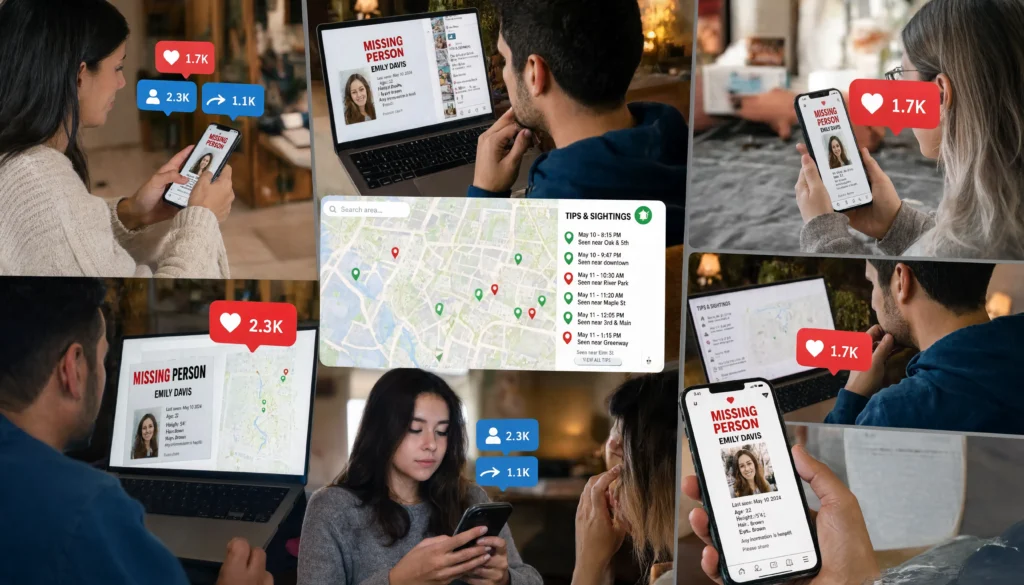
People frequently leave clues online without realizing it.
Missing person investigations often benefit from:
- Recent social media activity
- New friend connections
- Recent location tags
- Comments
- Marketplace activity
- Employment updates
Private Investigators can often establish whether an individual is actively using social media and identify areas where they may currently be located.
Locating Suspects
Law enforcement agencies and private investigators worldwide increasingly use OSINT techniques to locate suspects. South African Police Services need to catch up with this investigative technique. It is not fully embraced yet be soon they will realize the wealth of information a suspect could potentially leave online.
Social media posts may reveal:
- Current cities
- Travel routes
- Vehicles
- Associates
- Frequent locations
In some cases, private investigators have successfully located suspects purely through analysis of publicly available photographs and social media interactions.
Detecting Fraud
Fraud investigations are among the most common applications of social media intelligence.
Examples include:
Lifestyle Fraud
Anyone who followed the findings of the Madlanga Commission, as well as numerous high-profile corruption and tender fraud investigations in South Africa, will have noticed a common theme: many of the individuals implicated in these schemes openly showcased their wealth on social media. Photographs of luxury vehicles, multimillion-rand homes, designer clothing, extravagant holidays, and lavish social events often became part of their digital footprint. What may have appeared to be harmless social media posts at the time later provided investigators, journalists, and prosecutors with valuable intelligence.
Several prominent figures associated with state capture and corruption scandals, including former Free State Premier Ace Magashule, businessman Edwin Sodi, and former Bosasa executive Angelo Agrizzi, have seen aspects of their lifestyles scrutinised in the public domain. In many cases, investigators compared visible displays of wealth against declared income, business interests, government contracts, and financial records.
The lesson is simple: every photograph, status update, and social media post contributes to a person’s digital footprint. What is shared today for admiration or social recognition may tomorrow become evidence examined under a microscope by private investigators, journalists, regulators, or a court of law.
Private investigators often identify discrepancies between reported income and visible lifestyles.
Luxury vehicles, international travel, and expensive purchases may reveal information relevant to financial investigations.
Social Media and Cheating Spouse Investigations
One of the most requested private investigation services involves relationship matters.
Social media frequently provides valuable leads by revealing:
- Hidden relationships
- Tagged photographs
- Romantic comments
- Shared locations
- Travel patterns
- Connections between individuals
While social media alone rarely proves infidelity, it often helps investigators identify avenues for further investigation.
Child Custody Investigations
Family law matters increasingly involve social media evidence.
Courts are primarily concerned with the best interests of the child.
Social media may reveal:
- Substance abuse
- Reckless behaviour
- Unsafe environments
- Inappropriate conduct around children
Investigators carefully document publicly available information that may be relevant to custody proceedings.
Corporate Investigations and Employee Misconduct
Businesses frequently underestimate how much information employees share online.
Corporate investigations may uncover:
- Breaches of restraint agreements
- Moonlighting
- Confidential information disclosures
- Workplace misconduct
- Conflicts of interest
Employees often publicly reveal activities that directly contradict company policies.
This information can assist disciplinary proceedings and litigation.
Geolocation Intelligence
One of the most fascinating aspects of social media investigations is geolocation.
Even when users do not explicitly share their location, investigators can often identify locations through:
- Landmarks
- Buildings
- Street signs
- Shop fronts
- Vehicle registrations
- Geographic features
Modern private investigators combine social media analysis with mapping platforms and satellite imagery to identify locations with remarkable accuracy.
Metadata: The Hidden Information Behind Images
Many people focus only on what appears in a photograph.
Private investigators often focus on what cannot be seen.
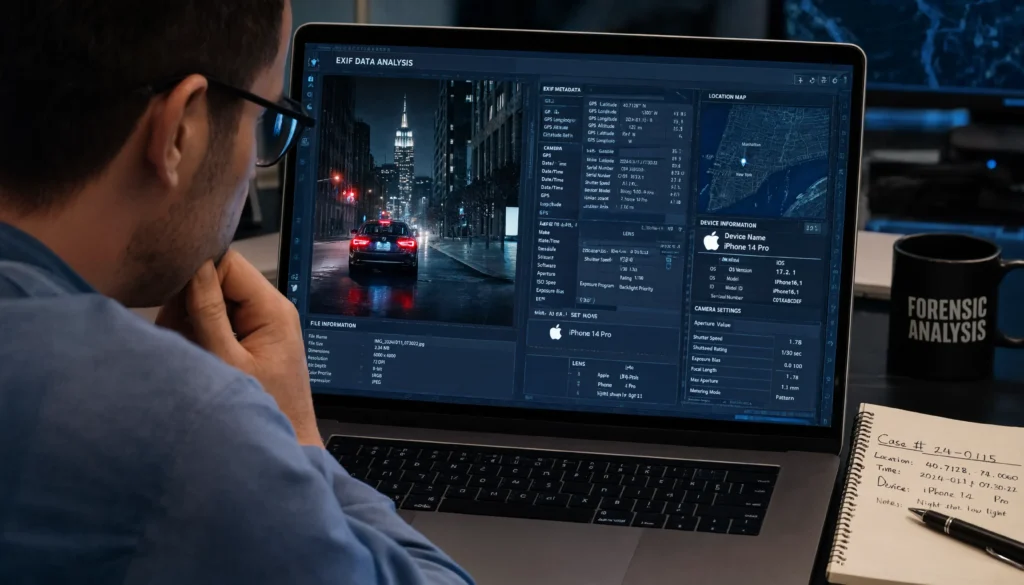
Digital images may contain metadata including:
- Creation dates
- Device information
- GPS coordinates
- Editing history
Modern OSINT tools increasingly analyse metadata automatically, helping investigators establish timelines and verify evidence.
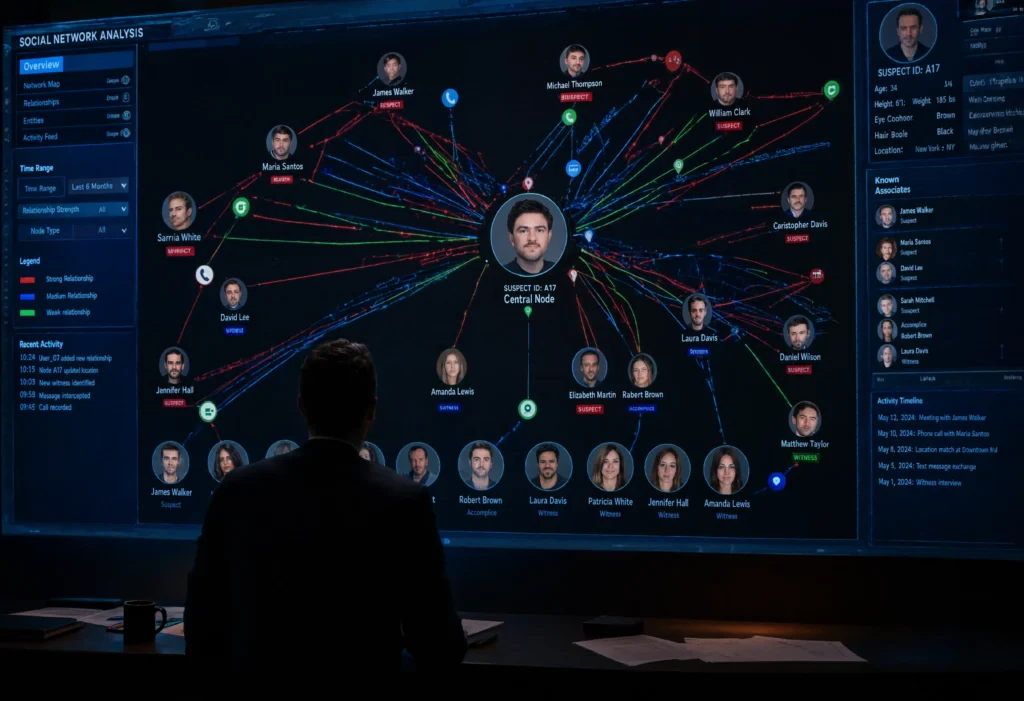
Social Network Analysis
Social media allows private investigators to identify relationships between individuals.
By analysing:
- Friends
- Followers
- Tagged individuals
- Shared content
- Interactions
Investigators can map networks and identify previously unknown connections.
This can be particularly useful in:
- Fraud investigations
- Organised crime investigations
- Corporate investigations
- Missing person investigations
Why Social Media Evidence Must Be Verified
One of the biggest misconceptions about OSINT is that everything online is accurate.
In reality:
- People lie online.
- Profiles may be fake.
- Images may be edited.
- Videos may be manipulated.
- AI-generated content is increasing.
Professional private investigators never rely on social media evidence alone.
All intelligence must be:
- Verified
- Corroborated
- Documented
- Preserved correctly
The growth of misinformation and manipulated content makes verification more important than ever.
The Legal and Ethical Side of OSINT
Professional private investigators operate within legal and ethical boundaries.
OSINT involves collecting information that is publicly available.
It does not involve:
- Hacking accounts
- Accessing private messages
- Intercepting communications
- Circumventing privacy controls
Ethical investigators focus on information that individuals have chosen to make public while maintaining compliance with applicable laws and privacy regulations.
Why Social Media Alone Is Not Enough
Despite its value, social media represents only one component of a professional investigation.
Experienced investigators combine:
- Surveillance
- Witness interviews
- Public records
- Background checks
- Corporate intelligence
- Asset tracing
- Digital forensics
- OSINT
The strongest investigations combine multiple evidence sources to create a complete and defensible picture.
How Royal Investigations Uses Social Media Intelligence
At Royal Investigations, social media intelligence forms part of many investigations conducted by our team of experienced private investigators.
We regularly utilise OSINT techniques to assist with:
- Fraud investigations
- Insurance investigations
- Child custody matters
- Missing person tracing
- Corporate investigations
- Background checks
- Surveillance operations
- Litigation support
- Asset tracing
- Infidelity investigations
Our investigators understand that the value of social media lies not in isolated posts but in the patterns, relationships, timelines, and intelligence that emerge through careful analysis.
Whether you require a Private Investigator in Johannesburg, Pretoria, Cape Town, or a Private Investigator anywhere in South Africa, our team has the experience to lawfully gather, analyse, and preserve digital intelligence.
Frequently Asked Questions
What is OSINT in investigations?
OSINT stands for Open-Source Intelligence. It involves collecting and analysing information from publicly available sources such as social media, websites, public records, news articles, and online databases.
Is it legal for private investigators to use social media?
Yes. Private investigators may review publicly available information. However, they cannot lawfully hack accounts, intercept communications, or access private content without proper authority.
Can social media posts be used as evidence in court?
In many cases, yes. However, evidence must be properly preserved, authenticated, and presented in accordance with legal requirements.
Can deleted social media posts still be found?
Sometimes. Cached content, screenshots, archived pages, and third-party sources may preserve information even after a post has been removed.
How do investigators verify social media evidence?
Investigators cross-reference information with other sources such as surveillance, witness statements, public records, metadata, and timeline analysis.
Can social media reveal someone's location?
Yes. Check-ins, geotags, landmarks, photographs, videos, and metadata can all assist in identifying locations.
Do investigators monitor private social media accounts?
Professional investigators focus on lawful methods and publicly available information. Accessing private accounts without authorisation may be unlawful.
How does social media help find missing persons?
Recent activity, friend networks, location tags, employment updates, and online interactions often provide valuable clues about a person’s whereabouts.
Can social media assist fraud investigations?
Absolutely. Social media frequently reveals activities, travel, assets, relationships, and behaviour that may contradict claims made during fraud investigations.
Why should I hire a private investigator instead of searching social media myself?
Experienced private investigators understand how to lawfully collect, preserve, verify, analyse, and document digital intelligence. They also combine OSINT with surveillance, interviewing, tracing, and other investigative techniques to produce reliable evidence.