
What Makes Evidence Admissible in Court?
In South Africa, evidence can make or break a case. You may possess photographs, recordings, emails, CCTV footage, WhatsApp messages, financial statements, surveillance reports, or witness testimony that appear overwhelming at face value — yet none of it matters if the court rules the evidence inadmissible.
This is one of the greatest misconceptions among members of the public. Many people believe that “proof is proof.” Unfortunately, the legal system does not operate that way. The manner in which evidence is obtained, preserved, handled, and presented is often more important than the evidence itself.
At Royal Investigations, we regularly encounter situations where victims only seek professional assistance after critical mistakes have already been made. Digital evidence has been altered. Surveillance footage was unlawfully obtained. Witness statements were contaminated. Phones were searched illegally. Chain of custody was broken.
In many cases, potentially devastating evidence becomes unusable.
South African courts are guided by strict evidentiary principles rooted in the Constitution, the Criminal Procedure Act 51 of 1977, common law, and judicial precedent. Whether the matter relates to fraud, cybercrime, infidelity, employee misconduct, theft, extortion, or commercial litigation, the admissibility of evidence is always a central issue.
This article explores:
- What makes evidence admissible in court
- How courts decide admissibility disputes
- What a “trial within a trial” means
- The importance of chain of custody
- Digital evidence and forensic integrity
- The role of private investigators
- SAPS Section 212 and Section 236 affidavits
- Why lawful evidence gathering matters
How Royal Investigations builds court-ready evidence

Why Admissibility Matters More Than Most People Realise
South African courts do not simply ask:
“Is this evidence important?”
They ask:
- Was it legally obtained?
- Is it authentic?
- Is it reliable?
- Can its origin be proven?
- Was the evidence tampered with?
- Does admitting it violate constitutional rights?
- Is there proper chain of evidence?
- Can the witness testify competently about it?
A perfect example is digital evidence.
A screenshot alone means very little unless someone can explain:
- Where it came from
- When it was captured
- Who handled it
- Whether it was modified
- Whether metadata exists
- Whether the device was preserved properly
This is where professional investigators and forensic experts become essential. Royal Investigations operate in Johannesburg, Pretoria, Cape Town and in the whole of South Africa.
South African Courts and the Constitutional Test
The Constitution of South Africa heavily influences admissibility.
Section 35 of the Constitution protects fair trial rights. Courts are extremely cautious about admitting evidence obtained unlawfully or improperly.
The Constitutional Court has repeatedly confirmed that illegally obtained evidence may be excluded if:
- It renders the trial unfair, or
- Its admission would negatively affect the administration of justice
This means that even highly incriminating evidence may be rejected if investigators acted unlawfully.
Examples include:
- Illegal interception of communications
- Unlawful access to phones or emails
- Trespassing during surveillance
- Coercion of witnesses
- Tampering with evidence
- Improper digital extraction techniques
This is precisely why professional, legally compliant private investigations matter.

What Is a “Trial Within a Trial”?
One of the most important concepts in South African evidentiary law is the “trial within a trial.”
This occurs when the admissibility of evidence itself becomes disputed.
Before the main trial continues, the court effectively pauses proceedings and conducts a separate hearing to determine whether the evidence should be allowed.
This mini-hearing focuses specifically on:
- How the evidence was obtained
- Whether constitutional rights were violated
- Whether the evidence is reliable
- Whether procedures were followed properly
- Whether confessions or statements were voluntary
Only after the court rules on admissibility does the main trial proceed.
Common Examples
A trial within a trial may occur when:
- An accused claims a confession was forced
- Digital evidence is alleged to be tampered with
- Surveillance footage authenticity is challenged
- A cellphone extraction is disputed
- Witness identification procedures are questioned
- Search and seizure procedures are attacked
This is where professional documentation becomes invaluable.
A private investigator who kept meticulous records, preserved metadata, documented dates and times, and maintained chain of custody may survive legal scrutiny. An amateur investigator usually does not.
Chain of Custody: The Backbone of Court-Ready Evidence
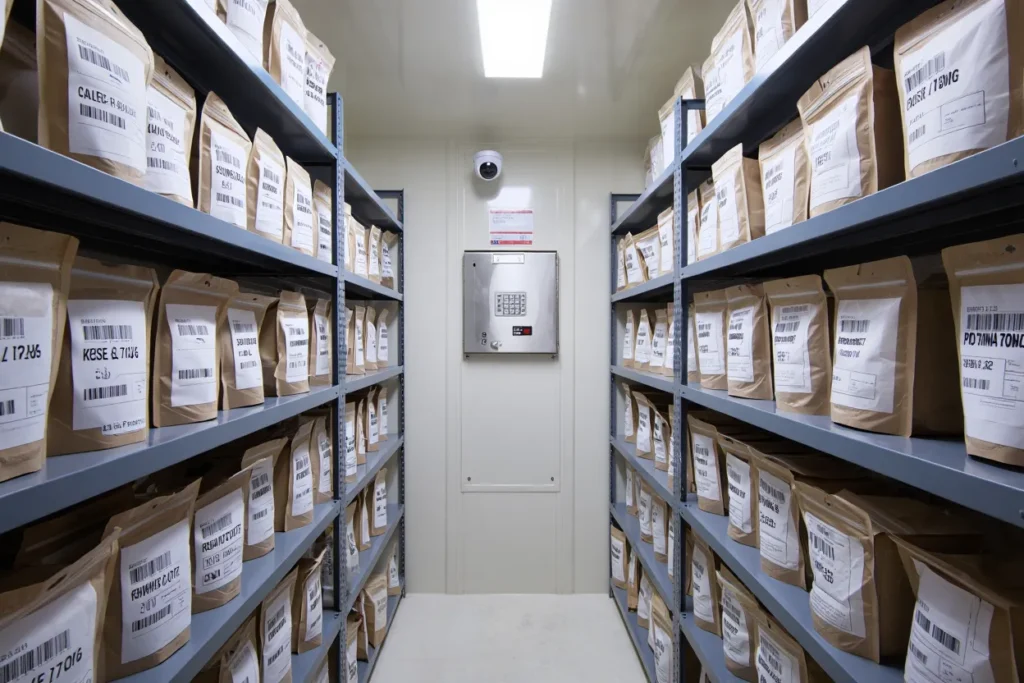
Chain of custody refers to the documented handling of evidence from the moment it is obtained until it is presented in court.
Every transfer, examination, storage procedure, and analysis should ideally be recorded.
If the chain is broken, the court may question:
- Whether the evidence was altered
- Whether it was contaminated
- Whether someone interfered with it
- Whether it can still be trusted
At Royal Investigations, chain-of-custody principles are treated with extreme seriousness.
Proper Chain of Custody Includes:
- Time-stamped evidence collection
- Secure storage
- Hash verification for digital files
- Evidence registers
- Witness confirmation
- Logging who handled the evidence
- Photographic documentation
- Forensic imaging procedures
This becomes especially important in:
- Fraud investigations
- Cybercrime cases
- Financial crime matters
- CCTV analysis
- Mobile phone extractions
- WhatsApp evidence
- Surveillance operations

The Growing Importance of Digital Evidence
Modern litigation increasingly revolves around digital evidence.
According to SABRIC, digital banking fraud, phishing attacks, business email compromise, SIM swap fraud, and online scams continue to rise across South Africa.
Digital evidence may include:
- Emails
- WhatsApp messages
- CCTV footage
- GPS data
- Metadata
- IP logs
- Browser history
- Social media records
- Cloud data
- Financial transactions
However, digital evidence is fragile.
A simple mistake can destroy evidentiary value:
- Opening files incorrectly
- Modifying timestamps
- Editing screenshots
- Failing to preserve metadata
- Using unreliable extraction tools
Courts increasingly rely on forensic principles to determine authenticity.
This is why professional digital investigations are becoming essential.
Can Private Investigators Testify in Court?
Absolutely.
A properly qualified and experienced private investigator may testify in both civil and criminal proceedings.
However, not every investigator is automatically regarded as an expert witness.
Courts consider:
- Experience
- Qualifications
- Methodology
- Credibility
- Independence
- Documentation
- Compliance with legislation
An investigator may testify regarding:
- Surveillance observations
- Digital forensic findings
- Evidence preservation
- Fraud investigations
- Background investigations
- Tracking and tracing
- Timeline reconstruction
- Chain of custody
Cross-examination is often aggressive. An investigator must be able to explain:
- How evidence was obtained
- Why certain methods were used
- Whether legal boundaries were respected
- Whether evidence integrity was maintained
This is one of the reasons clients increasingly prefer established agencies with experienced investigators rather than unregistered operators.
Understanding SAPS Section 212 Affidavits
Section 212 of the Criminal Procedure Act is extremely important in South African criminal proceedings.
In simple terms, a Section 212 affidavit allows certain facts to be introduced into evidence through an affidavit rather than requiring every expert to testify in person.
This commonly applies to:
- Forensic analysis
- Ballistics
- Fingerprints
- DNA
- Drug analysis
- Technical findings
- Electronic evidence
The purpose is to streamline court proceedings.
However, the defence may still challenge the affidavit and require oral testimony.
For investigators and forensic specialists, this highlights the importance of:
- Accuracy
- Proper documentation
- Scientific integrity
- Professional methodology
What Is Section 236?
Section 236 of the Criminal Procedure Act deals primarily with business records and documentary evidence.
It allows certain records made in the ordinary course of business to be admitted without requiring every individual involved in creating the document to testify. This are usually requested when investigators apply for a section 205 subpoena from financial institutions.
Examples may include:
- Banking records
- Telephone records
- Corporate documentation
- System-generated reports
- Business transaction histories
In modern investigations, Section 236 becomes highly relevant in:
- Fraud investigations
- Corporate investigations
- Asset tracing
- Financial crime
- Commercial litigation
Private investigators often assist attorneys by:
- Identifying relevant records
- Preserving documentary evidence
- Verifying authenticity
- Correlating timelines
Hearsay Evidence and Reliability
Hearsay evidence is generally inadmissible unless specific exceptions apply.
Hearsay occurs when someone testifies about what another person said, rather than what they personally observed.
Courts evaluate:
- Reliability
- Necessity
- Prejudice
- Interests of justice
Digital communication increasingly complicates hearsay issues.
For example:
- WhatsApp screenshots
- Anonymous emails
- Social media messages
- Voice notes
The court may require authentication proving:
- Who authored the message
- Whether the content was altered
- Whether the source is reliable
This is why forensic verification is becoming increasingly important.
Surveillance Evidence and Legal Boundaries
Surveillance is one of the most misunderstood areas of private investigations.
Many people incorrectly assume private investigators can:
- Hack phones
- Intercept calls
- Access bank accounts
- Track anyone unlawfully
This is false.
Professional investigators operate within legal parameters.
Improper surveillance can destroy a case.
Courts may exclude evidence if:
- Privacy rights were violated
- Trespassing occurred
- Communications were intercepted unlawfully
- Devices were compromised illegally
Why So Many Cases Collapse Due to Poor Evidence
South Africa faces significant investigative challenges.
Parliamentary discussions and criminal justice reports have repeatedly highlighted concerns regarding detective workloads, resource shortages, and case backlogs.
According to reporting surrounding SAPS operational pressures, many detectives manage extremely high docket volumes simultaneously.
This reality contributes to:
- Poor evidence collection
- Weak witness management
- Delays
- Lost evidence
- Incomplete investigations
At the same time, the growth of cybercrime, fraud, and digital offences has increased evidentiary complexity dramatically.
The result?
Cases often fail because evidence was:
- Improperly gathered
- Poorly documented
- Contaminated
- Legally defective
This is why experienced private investigators increasingly work alongside:
- Attorneys
- Advocates
- Forensic specialists
- Corporate legal teams
- Insurance investigators
How Royal Investigations Builds Court-Ready Evidence
At Royal Investigations, investigations are approached with litigation in mind from the very beginning.
Our methodology focuses on:
- Lawful evidence gathering
- Constitutional compliance
- Evidence preservation
- Chain of custody
- Detailed reporting
- Court-ready documentation
- Professional witness preparation
Our investigators include experienced professionals with backgrounds in:
- Criminal investigations
- Surveillance operations
- Fraud investigations
- Cyber investigations
- Intelligence gathering
- Corporate investigations
We understand that evidence is not merely about “finding information.”
It is about ensuring the information survives legal scrutiny.
The Art of Surveillance: Remaining Undetected
One of the biggest failures in amateur surveillance operations is becoming “burned” or identified by the target.
Once a target suspects surveillance:
- The operation may be compromised
- Evidence gathering may stop
- The suspect may alter behaviour
- Safety risks may increase
Professional investigators understand that surveillance is psychological.
Targets often become suspicious because investigators:
- Follow too closely
- Use the same vehicle repeatedly
- Park in obvious locations
- Stare excessively
- Behave unnaturally
- Remain stationary too long
Experienced surveillance teams use techniques such as:
- Multiple vehicle rotations
- Environmental positioning
- Urban blending
- Timed movement
- Observation points
- Layered surveillance teams
In high-level corporate or criminal investigations, suspects may actively conduct counter-surveillance themselves.
This is particularly common in:
- Corporate espionage
- Fraud syndicates
- Drug investigations
- Restraint of trade breaches
Insurance fraud investigations
Surveillance in Cheating Spouse Investigations
Infidelity investigations remain one of the most requested surveillance services globally.
Although exact South African statistics are difficult to quantify, various international studies suggest:
- Approximately 20–25% of married individuals admit to infidelity at some stage
- Digital communication platforms have significantly increased opportunities for secret relationships
- Mobile technology has changed how affairs are conducted and concealed
Professional surveillance can assist in:
- Confirming or disproving suspicions
- Identifying meeting locations
- Documenting behavioural patterns
- Protecting clients from false assumptions
- Assisting divorce litigation where relevant
Importantly, professional investigators focus on facts — not emotion.
At Royal Investigations, investigators often advise clients that surveillance may either confirm suspicions or completely clear an innocent spouse.
This objectivity is critical.
Restraint of Trade Surveillance Investigations
South African companies increasingly use surveillance investigations to enforce restraint of trade agreements.
A restraint of trade investigation may involve:
- Confirming employment with competitors
- Identifying client solicitation
- Documenting competing business activity
- Verifying breaches of contractual obligations
- Monitoring intellectual property misuse
Surveillance is often combined with:
- Digital investigations
- Social media analysis
- Open-source intelligence
- Corporate intelligence gathering
These investigations are extremely sensitive because improperly obtained evidence may damage a company’s legal position.
This is why lawful surveillance procedures are essential.
Insurance Fraud and Surveillance Operations
Insurance fraud costs the global economy billions annually.
The South African Insurance Association (SAIA) and fraud prevention bodies continue to warn about increasing fraudulent claims.
Common surveillance investigations include:
- False injury claims
- Disability fraud
- Vehicle fraud
- Staged accidents
- Workers compensation fraud
Investigators may monitor whether claimants:
- Engage in activities inconsistent with claimed injuries
- Operate businesses while claiming incapacity
- Perform physical tasks contradicting medical claims
However, lawful surveillance must always respect public/private boundaries.
Why Illegal Surveillance Can Destroy a Case
One of the biggest misconceptions is that “evidence is evidence.” At Royal Investigations we ensure evidence are court ready.
This is false.
Evidence obtained unlawfully may:
- Be excluded from court
- Damage litigation
- Create civil liability
- Lead to criminal charges
- Destroy credibility
For example:
- Illegal recordings
- Trespassing
- Unlawful interception
- Device hacking
- Illegal GPS tracking
- Fake social engineering
can severely compromise a case.
Chain of custody is equally important.
Evidence must show:
- When it was collected
- Who collected it
- How it was stored
- Whether it was altered
- Whether continuity was maintained
The Psychological Discipline Behind Surveillance
Professional surveillance involves enormous patience and discipline.
Investigators may spend:
- 12–16 hours observing one target
- Days without meaningful movement
- Weeks developing behavioural patterns
Good surveillance investigators avoid:
- Emotional involvement
- Assumptions
- Confirmation bias
Their job is to document facts objectively.
This is what separates professional investigators from amateurs.
Why Royal Investigations Excels in Surveillance Operations
Royal Investigations has built a reputation as one of South Africa’s leading private investigation firms.
The company’s surveillance capabilities are strengthened by:
- Experienced investigators
- Former law enforcement expertise
- Criminology backgrounds
- Advanced operational planning
- Legally compliant methodologies
- Court-ready reporting
- National operational capability
Royal Investigations conducts surveillance operations in:
The firm understands that surveillance is not simply about following people — it is about gathering credible, lawful, defensible evidence.
Why Experience Matters in Surveillance
Surveillance is one of the easiest investigative disciplines to perform badly.
A poor investigator may:
- Miss critical evidence
- Compromise operations
- Become detected
- Collect unusable evidence
- Escalate risks unnecessarily
An experienced investigator understands:
- Timing
- Behaviour
- Human psychology
- Legal boundaries
- Operational discipline
This experience can determine whether a case succeeds or fails.
Frequently Asked Questions
Can illegally obtained evidence be used in South African courts?
Sometimes, but courts may exclude it if admitting the evidence would render the trial unfair or harm the administration of justice.
What is chain of custody?
Chain of custody refers to documenting every stage of evidence handling to prove the evidence was not tampered with.
Can a private investigator testify in court?
Yes. Experienced private investigators may testify regarding their findings, surveillance observations, evidence preservation, and investigative methodology.
What happens during a trial within a trial?
The court pauses the main proceedings to determine whether disputed evidence should be admitted.
What happens during a trial within a trial?
Are WhatsApp messages admissible in court?
Are WhatsApp messages admissible in court?
Yes, but authenticity, authorship, and reliability must often be proven.
Can screenshots alone prove a case?
Not always. Courts may require metadata, device analysis, witness testimony, or forensic verification.
What is a Section 212 affidavit?
It is an affidavit used to introduce certain forensic or technical findings into evidence without requiring oral testimony initially.
What is Section 236 used for?
Section 236 relates to the admissibility of business and documentary records.
Section 236 relates to the admissibility of business and documentary records.
Yes. If it was obtained unlawfully or its authenticity cannot be verified, the court may exclude it.
Why should I use a professional private investigator?
Professional investigators understand lawful evidence gathering, chain of custody, court procedures, and evidentiary standards.
Final Thoughts
Evidence is not simply about uncovering the truth. It is about proving the truth lawfully, reliably, and professionally.
Far too many cases collapse because individuals attempt investigations themselves or rely on unqualified operators who fail to understand evidentiary rules.
In South Africa’s evolving legal environment — especially with the rise of cybercrime, digital fraud, and electronic communications — professionally gathered evidence has never been more important.
At Royal Investigations, our objective is not merely to investigate. Our objective is to help ensure the evidence can survive scrutiny in court.
If you require professional investigative assistance, surveillance operations, digital evidence preservation, fraud investigations, or court-ready reporting, contact Royal Investigations today.